Originally published in Dr. Eric Maass's Predictive Engineering Newsletter (Design for Six Sigma and Supply Chain Resilience). Dr. Maass is Six Sigma BELT Guru's Master Black Belt certifying partner. Republished with credit.
Last edition walked through the DFSS Flowchart, with the predictive engineering tools in the order they tend to work best. This edition looks at how predictive engineering effort pays off - with a "Flawless Launch". The research and development teams share a common, challenging goal, and celebrate together when the product successfully launches - without yield issues, without supply chain issues, without product quality issues...shipping product instead of fighting fires.
The anchor: You Don't Have to Dive and Catch: What a Flawless Launch Looks Like
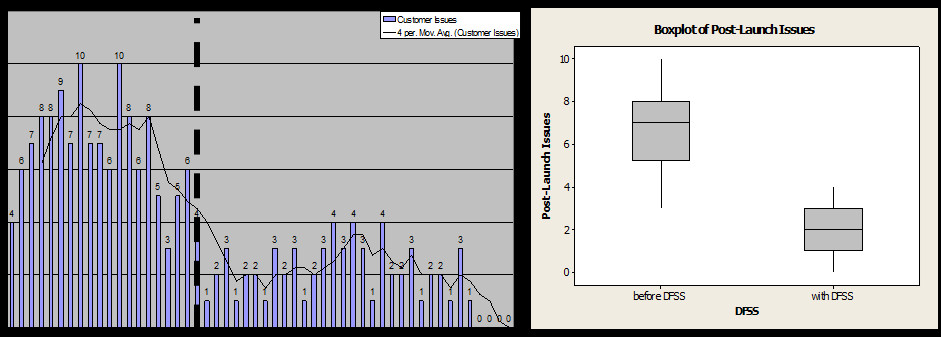
In June 2006, Robert Epson, Senior VP of Motorola Government & Public Safety, explained why his organization had made DFSS a requirement for every new product: "If you do the job right the first time, the probability of problems becomes smaller. You don't have to dive and catch."
The data backed him up. Before DFSS, a typical new product in that organization experienced a median of seven major customer issues or stop ships after launch. With DFSS, the median post-launch issues dropped to two. The difference was statistically significant by a t-test, a Mann-Whitney test, and ordinal logistic regression. Moreover, using DFSS, nearly all of the post-launch issues involving hardware (electronics and mechanical) disappeared - the median of 2 post launch issues consisted almost entirely of software and firmware issues (where DFSS had not been used).
Schedule risk improved as well. We asked each project manager, for each of 14 new product using DFSS from 2006 and 2007, to summarize the impact of DFSS on the schedule. According to the project managers, about 2/3 of the time (9 of the 14 projects) - DFSS had a favorable impact on their project schedule. For the remaining 5 projects, 36%, the project managers said DFSS had neither a favorable nor unfavorable impact. The project managers asserted they had not observed any project where DFSS had an unfavorable impact on the schedule. This was a pleasant surprise for me. One project manager said "saved 5 weeks", another said "shipped 4 weeks early", yet another "saved three to six months in the schedule."
By September 2007, Epson's assessment was simple: "Our investment in quality improvements on our core products and DFSS on new products is paying off."
Bob Epson coined the term "Flawless Launch" - aligned with his leadership team's definition of a successful product launch: high yield at launch, and no post-launch quality or supply issues for at least 6 months.
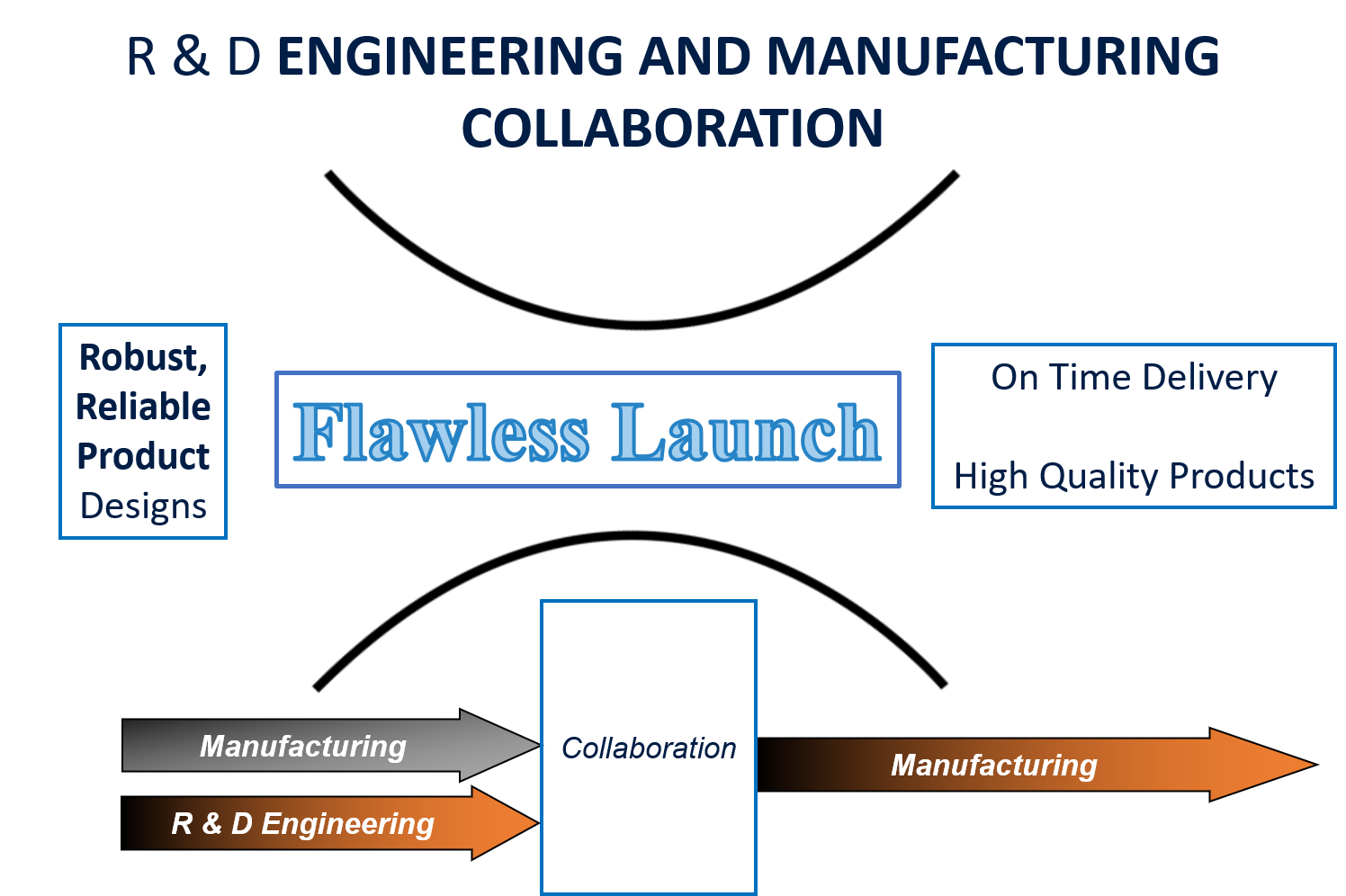
A Flawless Launch comes from R&D engineering and manufacturing working together, so that robust, reliable designs turn into high-quality products delivered on time and without major post launch issues.
Medtronic's StealthStation S8 surgical navigation system is an example. Eleven DFSS projects, five Black Belt and six Green Belt, covered design, reliability, and manufacturing. Mean time between failures doubled to 4 years compared with the prior product, and latency (from when the surgeon to an action until it was seen on the display overlaid on an MRI or CT-scan) improved by more than 77% - such that the delay was virtually imperceptible. Customers - neurosurgeons and their staff - were impressed and pleased! On the manufacturing side, savings the first year alone reached about half a million dollars.
I share more of these stories, and the methods behind them, in my very brief (92 pages) book, Flawless Launches: Profitable Products. And I may also share some additional examples and stories in future editions of this newsletter.
Learn more about Flawless Launches
— Eric Maass
From the field: FDA Warning Letter Shows What Happens When Changes Go Unvalidated
On Oct. 27, FDA posted warning letters to three medical device manufacturers, including an issue with nonsterile ultrasound gels.
FDA cited inadequate contamination controls and a reformulated gel whose changes were neither validated nor cleared through a new 510(k). The agency also pointed to repeated failures in environmental monitoring, investigations, and corrective actions, even after contamination was confirmed and customers had complained, along with a failure to report a correction involving contaminated product.
Why it matters: a launch is only as good as the controls that follow it. The evidence a team builds during development describes the product as designed. Once a formulation or process changes without validation, that evidence no longer covers what is actually shipping.
The other two letters cited a manufacturer marketing disinfection devices without premarket authorization and a firm promoting an eyelid cleaning device for unapproved uses.
Links worth bookmarking
- Shift Left Is Becoming A System-Level Problem: A Semiconductor Engineering panel looks at how bugs slip through the seams between hardware, software, and physical design teams, even when every component has been verified on its own. Requirement flow-down exists to close exactly those gaps.
- When Manufacturing Ramps Up, Quality Cannot Be Allowed to Ramp Down: Quality Magazine on how higher output introduces new process variation, and how statistical analysis, measurement system validation, and monitoring keep quality steady through the ramp. A good companion to this week's Anchor.
- Beyond the Risk File: Making Risk Management a Product Development Tool: A case for medical device risk management that guides design decisions, verification, regulatory commitments, and post-market oversight, so risk analysis shapes the product throughout its lifecycle.
© Proprein Labs 2026. Learn more at 6sigmaexperts.com or connect with Eric Maass on LinkedIn.